Booking choice: The K'gari all-inclusive day tour, from $198 per person. Check dates Tour details
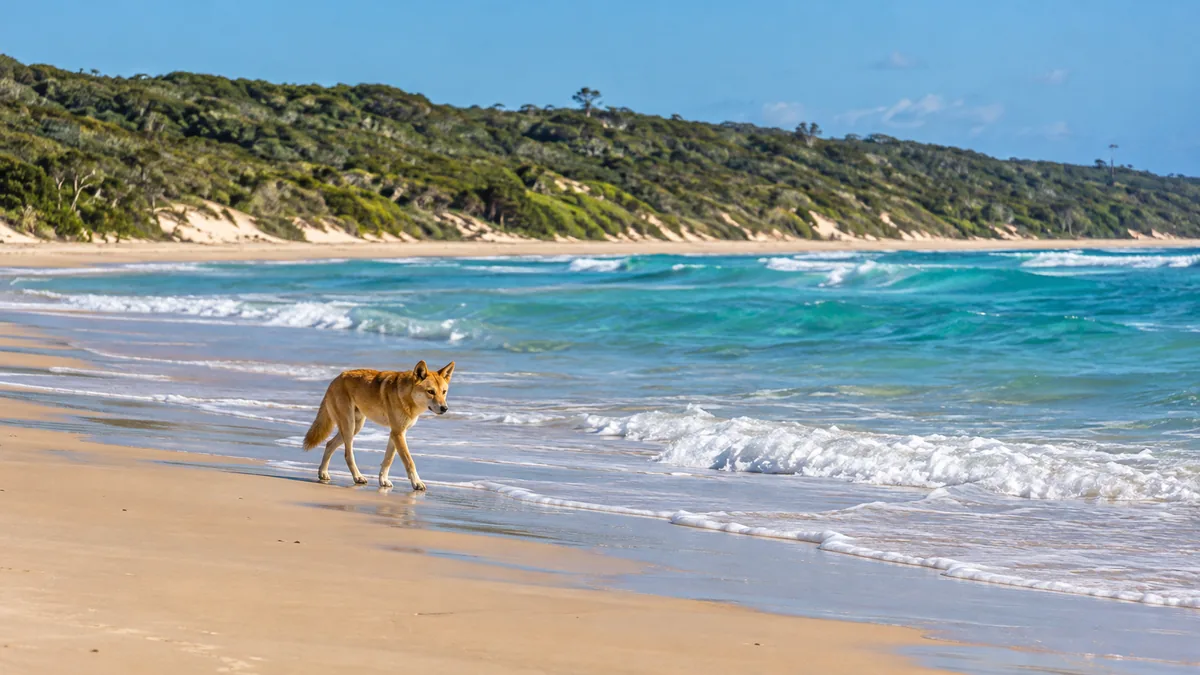
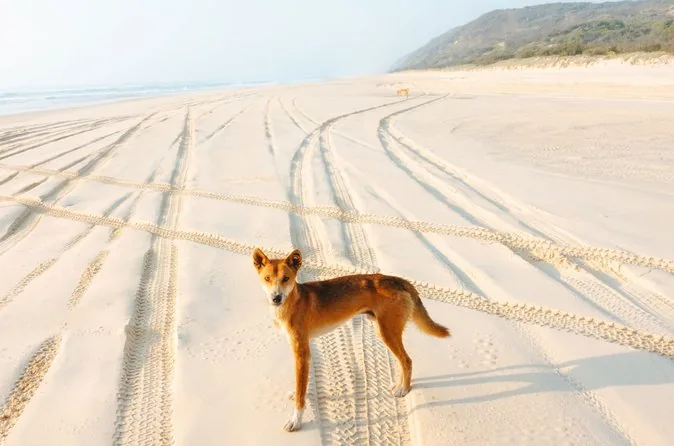
About 200 dingoes live on K'gari (Fraser Island), known as wongari to the Butchulla people and in QPWS usage. They hunt, scavenge and raise pups along the same beaches and tracks that around half a million visitors use each year. Most encounters are a dingo trotting past at a distance. Some are not.
This guide sets out the official rules, the fines, the seasons when dingoes act differently, and what changes if you travel with children or camp.
The quick answer
Never feed or approach a dingo, keep children within arm's reach at all times, walk in groups, carry a stick outside fenced areas and don't run. Feeding or disturbing a wongari brings an on-the-spot fine of AUD 2,763 (up to AUD 28,495 in court). Families with children under 14 are strongly advised to camp in fenced campgrounds. On a guided tour your guide handles most of this, but the arm's-reach rule is yours.
Are the dingoes on K'gari dangerous?
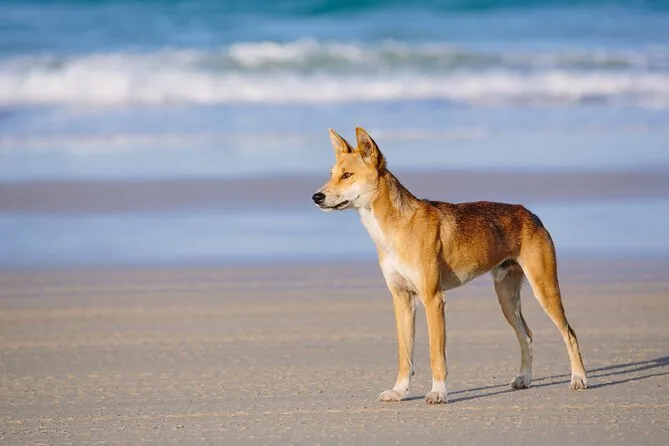
They can be. Most ignore people, but dingoes that learn people mean food become bold, and there were 19 high-risk interactions in 2025.
Media reporting of QPWS data counts high-risk interactions at 5 in 2022, 35 in 2023, 23 in 2024 and 19 in 2025 (ABC News, March 2026). Most involve a dingo approaching, circling or nipping, often after someone fed one or left food out. The risk is real and small, and it is shaped by what visitors do.
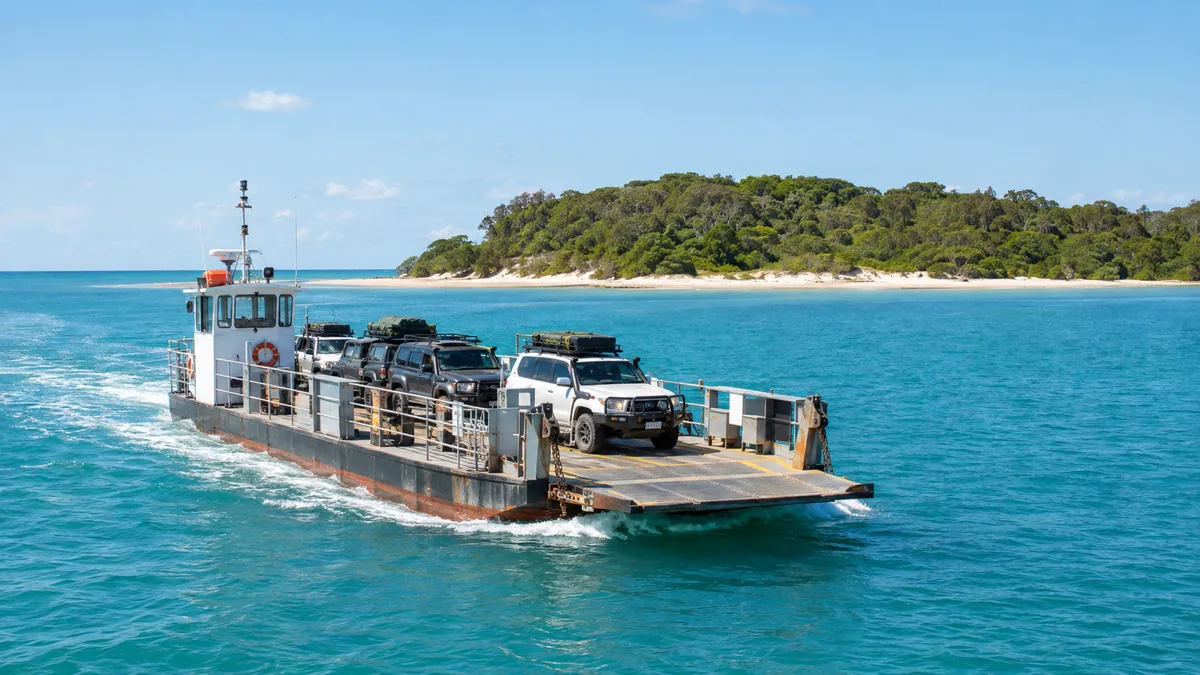
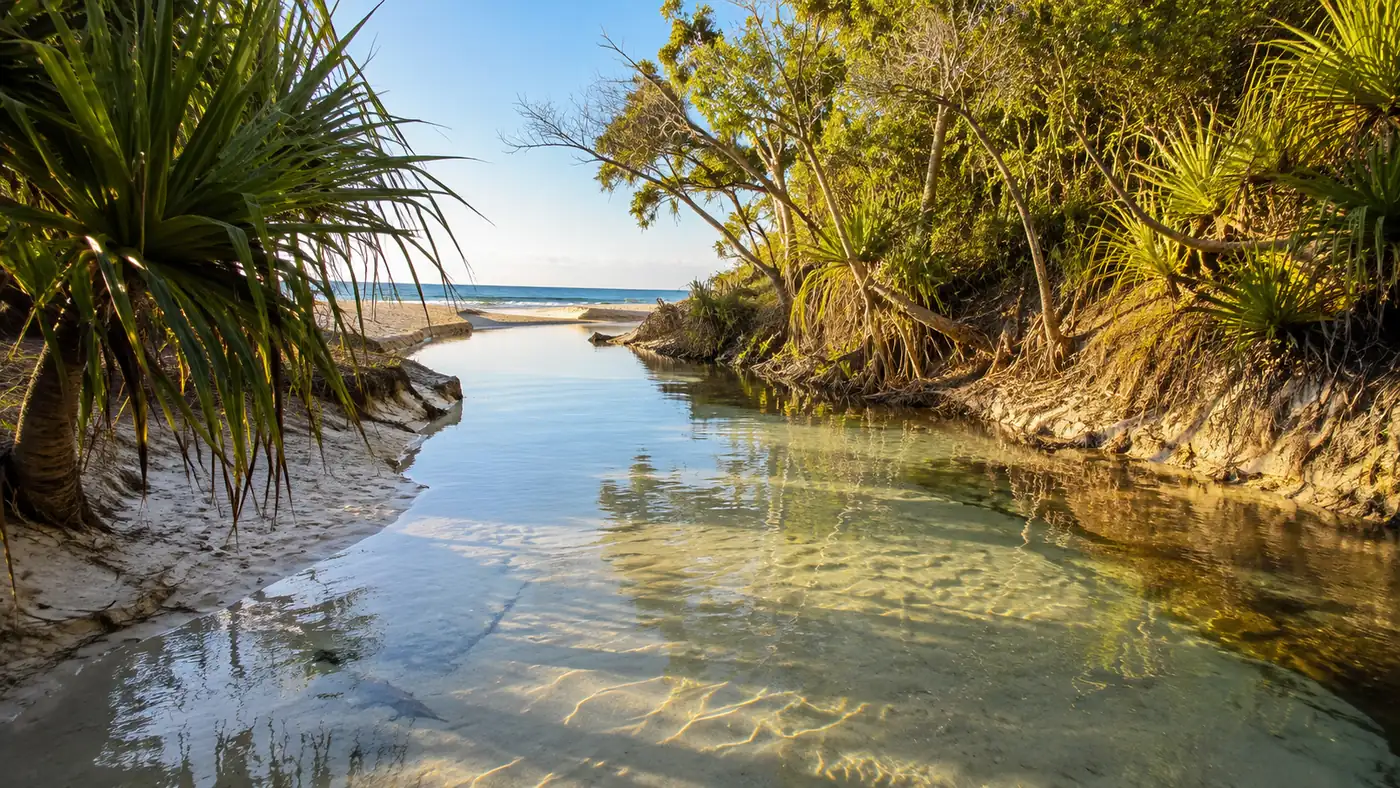
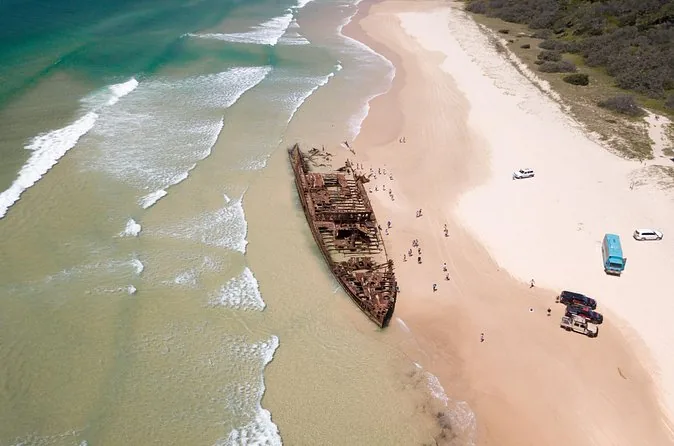
See the island with a guide who knows the wongari: Lake McKenzie, the Maheno and Eli Creek in a day.
Check dates for the K'gari all-inclusive day tourWhat are the be-dingo-safe rules?
Stay within arm's reach of children, always carry a stick outside fenced areas, walk in groups, don't run, never feed them, and lock away food and rubbish.
Straight from QPWS (be dingo-safe):
- Children within arm's reach at all times, teenagers included if they are small.
- Carry a dingo safety stick outside fenced areas. A hiking pole, an umbrella or a fishing rod will do.
- Walk in groups. Don't walk alone, early or late, on beaches or tracks.
- Don't run or jog. Running can trigger a chase.
- Never feed them, and secure food, bins and fish scraps.
If a dingo approaches: stand tall, face it, fold your arms, and back away calmly with others. If it attacks, defend yourself aggressively and call 000.
What is the fine for feeding a dingo on K'gari?
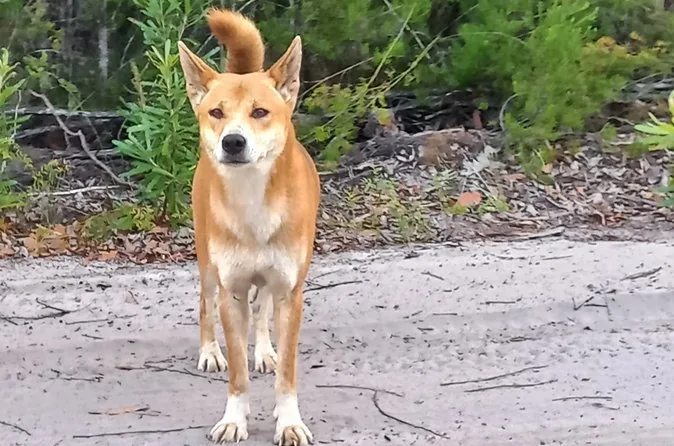
AUD 2,763 on the spot from 1 July 2026, and up to AUD 28,495 in court. Leaving food where dingoes can reach it costs AUD 518 on the spot.
| Offence | On the spot (AUD) | Court maximum (AUD) |
|---|---|---|
| Feeding or disturbing a wongari | 2,763 | 28,495 |
| Food not stored securely, or made available | 518 | 6,908 |
These track the Queensland penalty unit, which rose to AUD 172.70 on 1 July 2026. Rangers do issue them.
Is K'gari safe for children?
Yes, with constant supervision. QPWS says keep children within arm's reach outside fenced areas, and families with children under 14 should camp in fenced campgrounds.
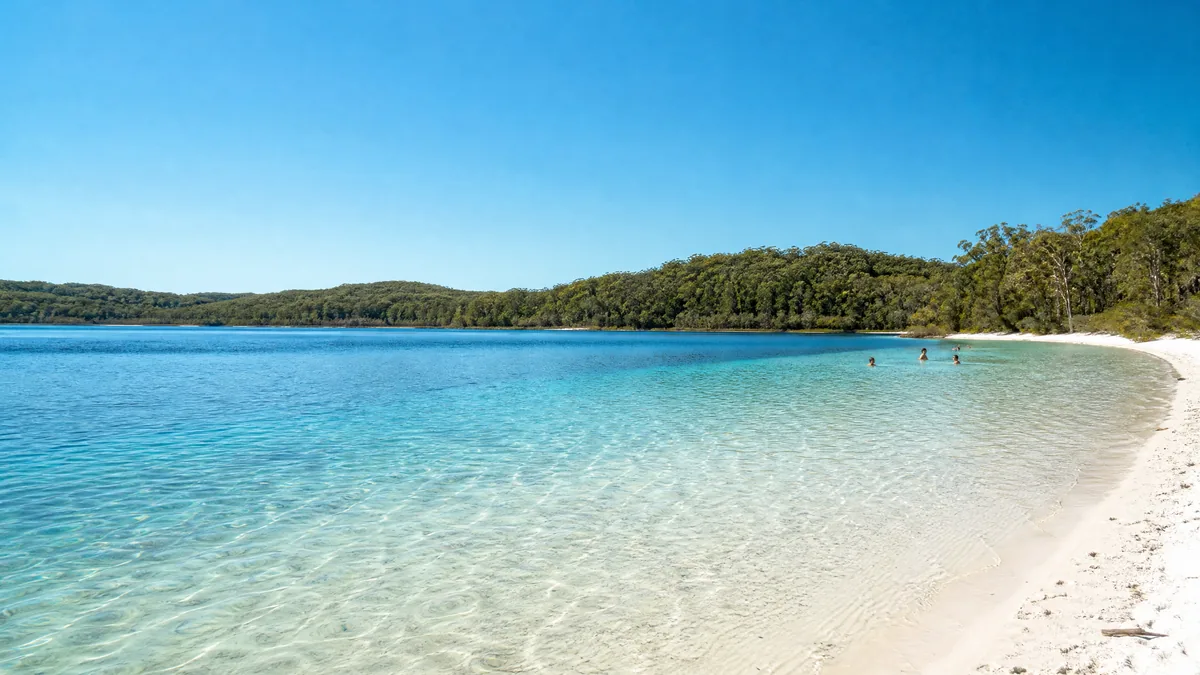
A child on their own, even a few metres away at the edge of a lake, is the classic risk scenario. Watch your kids at Lake McKenzie, in Eli Creek and on the beach at the Maheno. K'gari Explorer takes children from age 1; Discovery K'gari from 5. On a tour, guides time stops and keep the group together, which helps. They are not babysitters.
Planning a family trip in the summer holidays? That is dispersal season, when young dingoes leave the pack. Read our summer holidays post first.
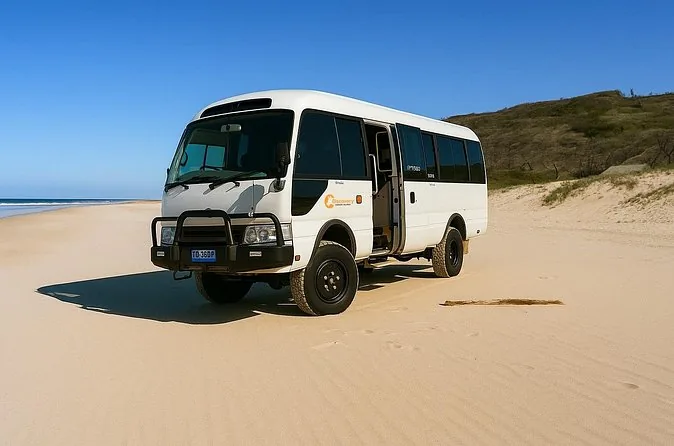
A small group of 20, minimum age 5, with 90 minutes at Lake McKenzie and lunch.
Explore the day tour from Rainbow Beach Tour detailsWhich K'gari campgrounds are fenced against dingoes?
Central Station, Cornwells, Dundubara, Eli, Lake Boomanjin, One Tree, Wongai and Waddy Point top, says QPWS.
These have dingo-deterrent fences, and the gates must stay shut (QPWS fenced campgrounds). Outside a fence, dingoes can walk through your camp at night: store all food and rubbish in a locked car or box, and never leave shoes or bags outside a tent. Beach camping zones close from time to time for habituated dingo packs; check park alerts.
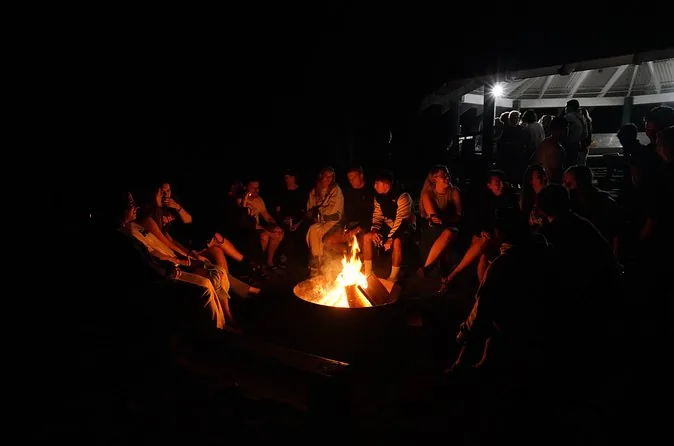
Tours use fenced sites too: the Dingos tag-alongs sleep in a dingo-proof beach camp, and the 2-day K'gari Explorer stays at a resort.
Two days, one night at a beach resort, twice the lake time and Champagne Pools.
Check dates for the K'gari 2-day tourWhen are dingoes most active on K'gari?
Each season has a risk: mating from March to May, whelping from June to August, rearing from September to November, and dispersal from December to February.
| Season | Months | What it means for you |
|---|---|---|
| Mating | Mar to May | Males roam and can be territorial |
| Whelping | Jun to Aug | Packs defend dens; give them space |
| Rearing | Sep to Nov | Adults hunt hard to feed pups |
| Dispersal | Dec to Feb | Young dingoes leave the pack and test people, during the summer holidays |
Seasons from QPWS dingo ecology. QPWS issues park alerts for each one; the 2026 whelping alert ran from 1 June to 31 August. More on the calendar in the best time to visit.
What happened in the January 2026 dingo attack?
Piper James, a 19-year-old Canadian working on the island, died on 19 January 2026 on the eastern beach. The coroner found she drowned after injuries from a dingo attack.
She was found early in the morning, with about 10 dingoes around her. Eight dingoes were later euthanised. The coroner's finding was released on 6 March 2026 (ABC News). It was only the third confirmed fatal dingo attack in Australia; one of the others, in 2001, was also on K'gari.
Her parents have called for stronger warnings in busy periods (ABC News). The Butchulla Aboriginal Corporation has long asked for visitor caps in breeding season and called the cull disappointing (National Indigenous Times). The Queensland Government has ruled out caps. The rules above are the practical response open to every visitor.
What do K'gari tours do about dingoes?
Guides brief you, keep the group together, choose where you eat, and sleep you in fenced or resort accommodation on multi-day trips.
On a day tour, lunch is eaten at a resort or in a fenced picnic area, not on the open beach, and food stays on the vehicle. Guides tell you when a dingo is near and where to stand. On the Dingos tag-along, the camp is dingo-proof. None of this replaces your own care: arm's reach for kids, no food on the beach, no walking alone.
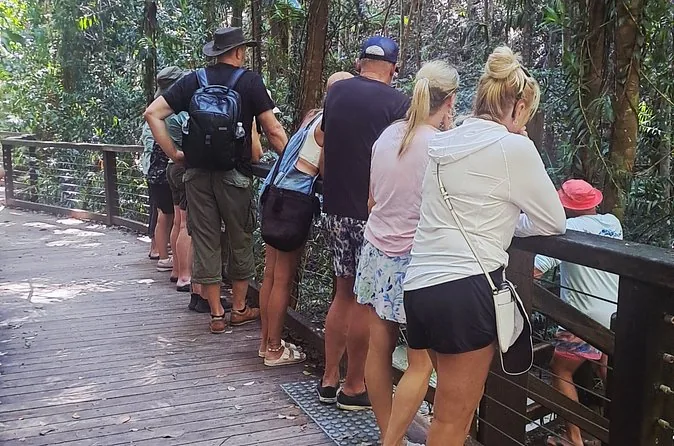
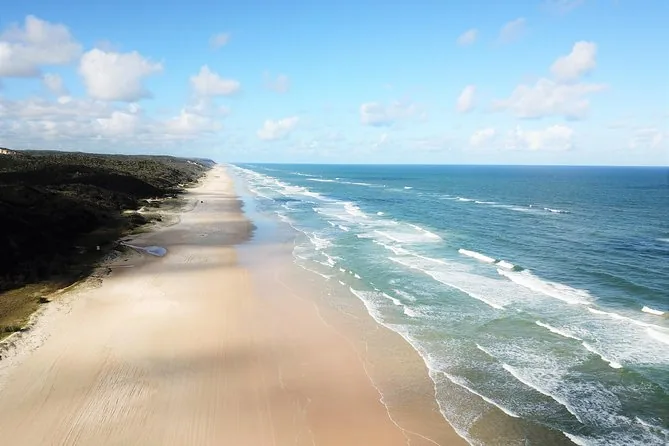
A driver-guide, the ferry, park fees and lunch: the whole classic island in one day.
Explore the K'gari all-inclusive day tour Tour detailsFrequently asked questions
Can you see dingoes on a K'gari tour?
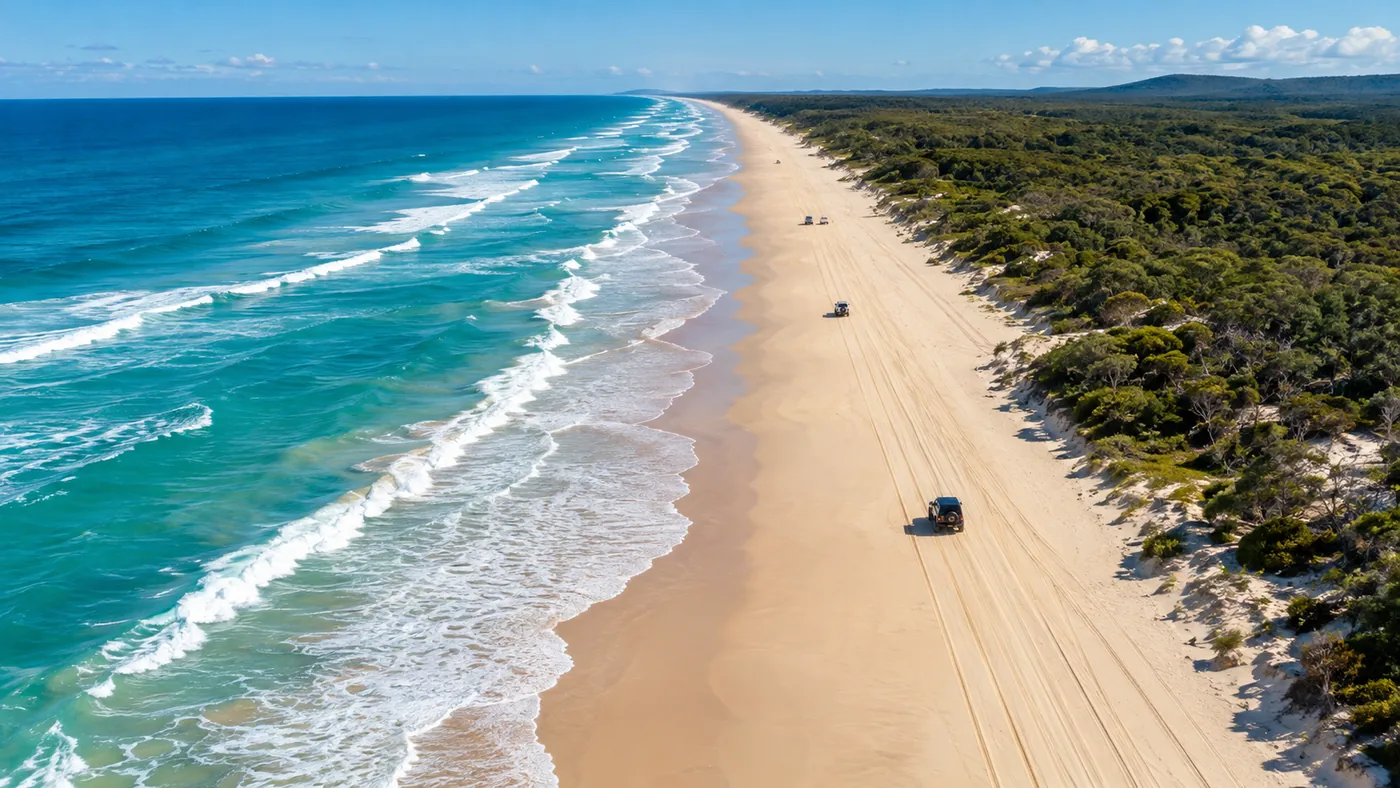
Often, but never guaranteed. Guests report seeing them on 75 Mile Beach and near the Maheno. Watch from the vehicle or at a distance.
What should I do if a dingo approaches me?
Stand tall, face it, fold your arms, and back away calmly with your group. Don't run. If it attacks, fight back and call 000.
Can children go on K'gari tours?
Yes. K'gari Explorer accepts children from age 1 and Discovery K'gari from age 5. Keep them within arm's reach outside the vehicle.
How much is the fine for feeding a dingo?
AUD 2,763 on the spot from 1 July 2026, with a court maximum of AUD 28,495.
Ready to book
Choose your tour
Free cancellation on every option (24 hours before on day tours, 6 days on the Dingos tag-alongs). Prices are from-prices in USD and move with the season.
K'gari All-Inclusive Day Tour
- 4WD coach with a driver-guide, 7:30 am start
- Return passenger ferry and national park fees
- Lake McKenzie 1 h, Maheno, Eli Creek, Central Station
K'gari Explorer 2-Day Tour
- 4WD coach and guide for two days
- A night at K'gari Beach Resort on 75 Mile Beach
- Lake Wabby, Lake McKenzie 2 h, Champagne Pools
K'gari 4WD Day Tour from Rainbow Beach
Twenty people at most and 90 minutes at Lake McKenzie, lunch there